
SUV or saloon? How to choose the right car for your trip
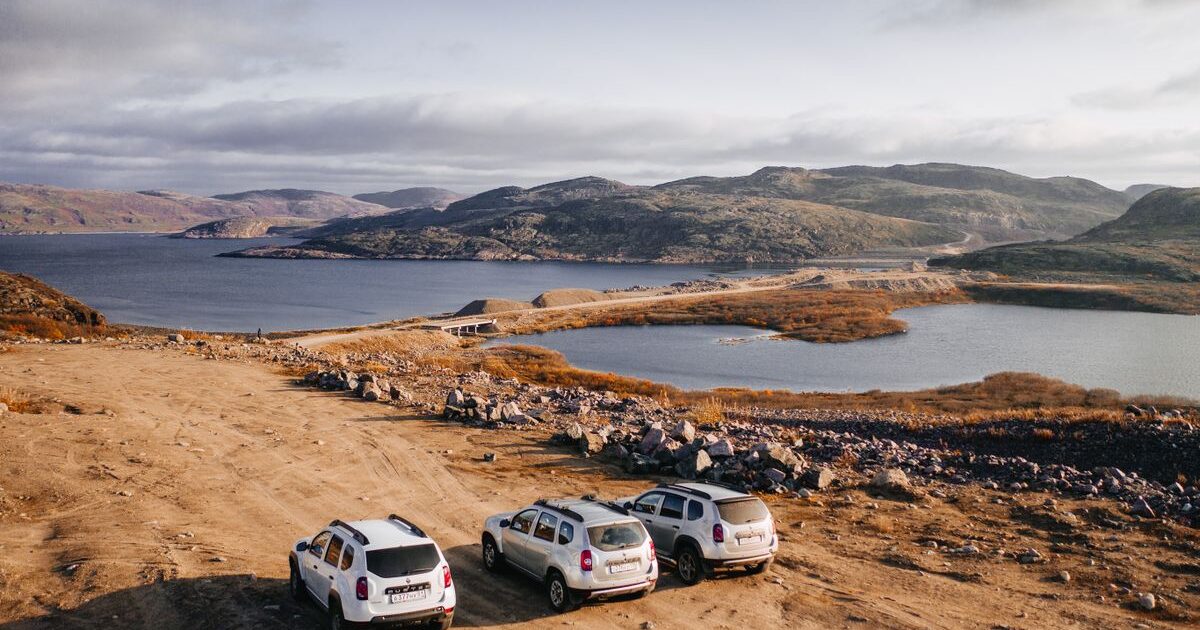
When you open our fleet and have to choose a car quickly, it is tempting to go on instinct: “I’ll just take an SUV, it feels safer” or “I’ll take the cheapest, I won’t spend long in the car anyway”. Both instincts can backfire. An SUV for a two-day city break in Bucharest means higher fuel consumption, a car that is harder to park in the narrow streets around the Old Town and a daily cost the route doesn’t justify. An economy car for four adults with a week’s luggage heading to the mountains means a crammed boot, knees against the dashboard and a small engine that struggles on the first serious climb in the Prahova Valley.
The difference between a successful rental and a frustrating one is not the badge on the bonnet but how well the car matches the route you actually have to drive. Below you will find exactly the decision framework we use on the phone when a customer hesitates between two types of car, plus a run-through, type by type, of every model in our fleet — so you know in advance, not after you have set off, whether you need a saloon, an SUV or something else.
Four questions to ask before you open the list of cars
The first question, the simplest and yet the most often ignored, is how many people will actually be in the car on each day of the trip — not just on the day you leave. A couple heading to the seaside in summer doesn’t have the same needs as four colleagues going to a weekend training course in Sinaia, and a family with two small children and car seats takes up a completely different amount of space from four adults without luggage. The raw number of seats matters less than the real space available once everyone and everything they are carrying is inside.
The second question is the volume of luggage, not the number of bags. Two large carry-on bags fit easily in an economy car’s boot; two 23 kg suitcases plus a ski bag and a camera backpack won’t, however hard you push. If you are travelling with bulky equipment — skis, bikes, a double buggy, materials for an exhibition or trade fair — this matters more in choosing the car than the number of passengers.
The third question is the type of road. A weekend spent entirely in Bucharest, with underground car parks and city-centre traffic, favours a compact, easy-to-handle car. A mountain route, with hairpin bends, minor roads to chalets or unpaved tracks around Bran and Moieciu, calls for the higher ground clearance of an SUV. Don’t confuse the drive from the airport to the hotel with the whole holiday route — many customers choose their car based on the first 20 kilometres and regret it at Predeal.
The fourth question is budget, but weighed against your real need for comfort. When you book online you immediately see the final price for each car, with no deposit, and the difference between types is clear in euros per day. It is worth asking yourself honestly whether you are paying for a bigger car because of the comfort you need or for the image you want to project at a business meeting — both are valid reasons, but the budget should match the real one.
- Count the passengers for every day of the route, not just on departure
- Estimate the volume of your luggage, not just the number of bags
- Check whether your route leaves the city on mountain roads
- Compare the final daily prices of the types of car you are considering before deciding
- Choose the gearbox you feel confident with, not the one you want to practise on
Type by type: who each car in our fleet suits
The Dacia Logan, Fiat Tipo and Seat Toledo are the economical choice for city driving, short trips between Bucharest and the surrounding area, or for anyone travelling alone or as a couple who wants the lowest daily cost in the fleet. They are easy to park in the streets of Cotroceni or Dorobanți, use little fuel in city traffic and cope well with a trip to Ploiești or Târgoviște — and their boots are surprisingly generous for their class. They are less suited to four adults with large luggage on long motorway journeys with many hours behind the wheel.
The Skoda Scala and Renault Megane are the balance point for anyone who wants a bit more comfort and refinement than an economy car without moving up to a business saloon. They suit a couple with a large bag each, a weekend out of town, or anyone who doesn’t want to compromise on suspension comfort on a less well-maintained county road.
The Opel Astra automatic (diesel) is the only automatic car in our fleet and our firm recommendation for anyone used only to an automatic gearbox, as well as for long trips where fuel economy matters — for example Bucharest–Sibiu or Bucharest–Constanța and back on the same day. The automatic gearbox removes the hassle of changing gear in heavy traffic, and the diesel engine is economical over distances of 300–400 km and more.
The Skoda Octavia, Opel Insignia and Ford Mondeo are designed for business travel — meetings with partners, visiting a client in another town or simply arriving relaxed, with little engine noise and a generous boot for presentation materials or a week’s luggage. They don’t attract attention, but they impress with their comfort; the Ford Mondeo has a diesel engine, ideal for long distances.
The Hyundai Kona, our compact SUV, is the recommendation for mixed routes — some city, some county roads, perhaps a short forest track to a chalet or guesthouse. The higher ground clearance makes a difference on gravel or packed snow, and the raised driving position gives you better visibility in traffic.
The Opel Zafira 7 seats solves the group problem exactly — an extended family, a group of friends heading to the mountains together or a small team travelling to an event. It is the only option in our fleet when there are more than 5 passengers and the luggage still has to fit.
Manual or automatic? What to know if you are not used to a gear stick
Most cars in our fleet have a manual gearbox, which is normal for the Romanian and European market, where manual gearboxes are still standard even on mid-range cars. For a driver used to manual, this is no problem at all. For a visitor from a market where automatics are the rule — the United States, many Asian countries — it is a different story, especially if their last experience with a manual gearbox was at driving school.
If you haven’t driven a manual recently or simply prefer to remove one more variable in an unfamiliar city, the Opel Astra automatic is the only automatic car in our fleet and a safe choice for any route, from the drive from Otopeni into the centre to a journey of a few hundred kilometres to the coast or the mountains. The transmission of every car is shown on the fleet page, so you can quickly rule out the options that don’t suit you before you get to the booking form. As there is only one automatic car, we recommend booking it as early as possible.
A practical tip if you do choose manual: Bucharest traffic, especially on Șoseaua Kiseleff, Piața Victoriei or Calea Floreasca at rush hour, means frequent gear changes. If you are not comfortable with that, the automatic option easily pays for itself in the stress you avoid during your first hour of driving in a new city.
Mountain roads or winter conditions: what really matters
The classic Bucharest–Brașov route, on the DN1 via Ploiești, Sinaia, Bușteni and Predeal, or on the A3 motorway combined with the DN1 for the mountain section, climbs above 900 metres in less than 120 kilometres. The hairpins at Posada, the bends around Bușteni and Predeal and the heavy traffic on Friday evenings and Sunday afternoons are realities every driver should take into account, whatever the car.
For these roads, especially between November and March, the Hyundai Kona offers a real advantage: higher ground clearance, a better feel on packed snow and a driving position that helps visibility in fog, which is frequent around Comarnic and Bușteni early in the morning. A saloon or an economy car is not unsuitable if the roads have been cleared, but it is at a disadvantage in heavy snow or on untreated minor roads, like many of those leading to chalets around Poiana Brașov or Bran.
All cars in our fleet include compulsory third-party (RCA) insurance, whatever the season or destination, so basic insurance is not an extra concern on mountain roads. What remains your responsibility is adapting your speed to the conditions and, if heavy snow is forecast, choosing a car with higher ground clearance when you book — not improvising at the last minute at Otopeni or Băneasa.
Not too big, not too small: the sizing mistake we see most often
The most common “too big” mistake is choosing a large car for one person or a couple without bulky luggage, usually out of caution or a wish for maximum comfort “just in case”. The result is a higher daily cost, higher fuel consumption and, in Bucharest, a car that is harder to park in the central streets or older neighbourhoods with narrow parking spaces.
The opposite mistake, “too small”, happens when four or five people with a week’s luggage choose the cheapest car just because of the low daily price. The difference in cost between an economy car and a bigger one over a week is often smaller than the extra baggage fee you would pay on a flight, but the discomfort in the car stays with you every day of the holiday — a badly calculated saving, paid for with your knees against the dashboard.
Our practical advice: choose the car for the busiest scenario of your trip, not the lightest. If most days there are two of you but one day a third colleague with luggage joins you, choose for three. And remember that at Skycar there is no deposit — read more in our article on renting with or without a deposit — so you only need to compare the final daily prices of the cars you are considering.
If you are still torn between a saloon and an SUV, the simplest thing is to open the full fleet, compare the cars side by side with the daily price for your exact dates, and then fill in the online booking form — you will see the final price instantly, with no deposit, and after you send your request you will get a confirmation call shortly. If you want concrete route ideas for the car you choose, take a look at the must-do drives around Bucharest — it might even change your choice of car.
October 2026 update: if you have a lot of luggage or are travelling with children, an SUV or 7-seater gives you more space, while a saloon remains the more economical choice for long motorway journeys. Tell us about your plans when you book and we will help you choose.
Note: the information in this article is general and may be updated as legislation changes. It does not constitute individual legal advice. For your specific situation, ask for a quote or call 0765.416.139.