
Bucharest through the eyes of foreign tourists: experiences, spectacular places and reasons to discover Romania’s capital
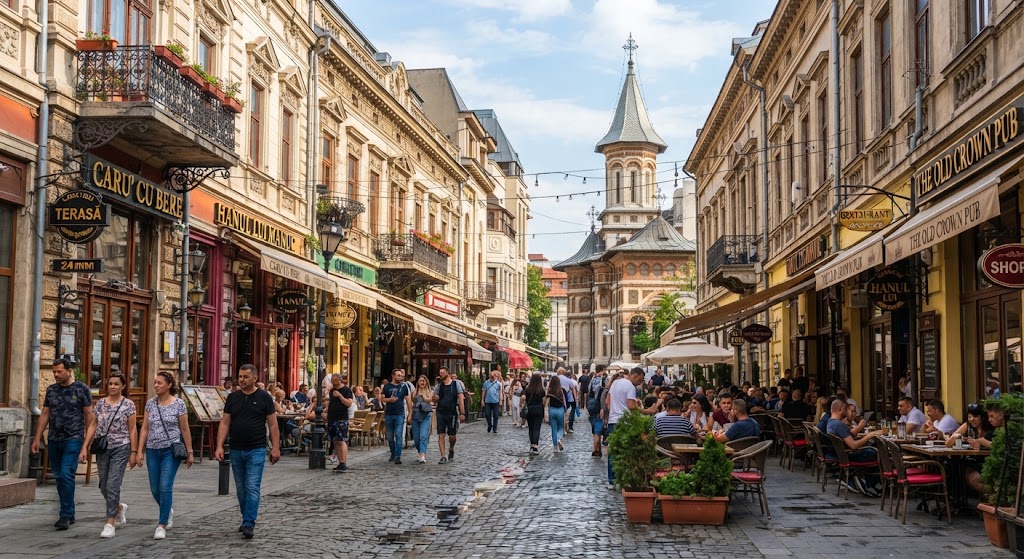
Few European capitals bring together as many contrasts in a relatively compact urban space as Bucharest. Here history meets modernity, sometimes in surprising ways: palaces built in times of prosperity, boulevards that still bear the mark of past architecture, monumental buildings from the communist era and contemporary neighbourhoods where restaurants, cafés and cultural venues give the city a special energy.
For foreign visitors, Bucharest can be an interesting alternative to Europe’s well-known destinations. It doesn’t have the perfectly ordered image of some Western capitals, but it makes up for it with diversity, authenticity and the chance to discover experiences that don’t look like an ordinary tourist circuit.
Romania’s capital attracts visitors with its heritage, local food, nightlife and relatively affordable prices. On top of that, important destinations are close enough to extend a holiday beyond the city limits.
Read also: Romania, a destination worth discovering beyond the usual routes
Bucharest is worth exploring patiently. Some of its most interesting details are not necessarily in the big attractions, but in the side streets, the courtyards of old buildings and the places where locals go.
A European capital with a different story
Bucharest was long nicknamed “Little Paris” because of the French influences visible in its architecture and culture. In the late 19th and early 20th centuries the capital grew rapidly, and many buildings were built on Western models.
This heritage can still be seen today on Calea Victoriei, in the old residential neighbourhoods and around major cultural institutions.
Yet Bucharest cannot be understood only through its elegant past. Recent history has deeply shaped the city. The communist regime radically changed many areas, and economic development after 1989 brought a new generation of buildings, businesses and public spaces.
Read also: Bucharest by rental car: parking, city routes and day trips nearby
These changes created an unusual urban landscape. In a single walk you can go from an interwar villa to a boulevard lined with massive apartment blocks and then to a modern district of restaurants and office buildings.
For travellers who like cities with a strong identity, this diversity is an important argument. Bucharest is not a destination built only around tourism: it is a living capital, where everyday life goes on among monuments and historic buildings.
Another attraction is the balance between budget and experience. Compared with many Western European cities, visitors can find more affordable options for accommodation, restaurants and leisure, which makes it possible to plan a comfortable holiday without spending as much as in other popular capitals.
Architectural and historical landmarks that define Bucharest
To understand how the capital has evolved, it is worth starting with a few buildings that have become its symbols. Each tells a different story and illustrates an important stage in Romania’s history.
The Palace of Parliament – a witness to radical change
The Palace of Parliament is probably one of Bucharest’s best-known buildings internationally. Its impressive size makes it a landmark of 20th-century monumental architecture.
Its construction began under the communist regime of Nicolae Ceaușescu. The project profoundly changed a large part of the city centre through the demolition of neighbourhoods, homes and historic buildings.
Today the palace houses the Romanian Parliament and can be visited on guided tours, depending on availability.
For a tourist, the visit goes beyond admiring the architecture: the building offers concrete context for understanding a controversial period in the country’s history.
The Romanian Athenaeum – a symbol of cultural tradition
In a completely different register stands the Romanian Athenaeum, one of the capital’s most admired historic buildings.
Opened in 1888, it stands out for its neoclassical architecture and its role in Romanian musical life. Its concert hall is linked to the George Enescu Philharmonic and hosts major classical music events.
For visitors with time, attending a concert can turn a simple sightseeing stop into a genuine cultural experience.
Calea Victoriei – the capital’s history in a single walk
Calea Victoriei is one of the streets that best captures Bucharest’s evolution. Along it are historic buildings, museums, landmark hotels, restaurants and cultural venues.
It is an ideal route for discovering the city without rushing: you can observe architectural details, photograph iconic buildings and find interesting places to eat and drink.
Stavropoleos Monastery and the Old Town
Near the Lipscani area stands Stavropoleos Monastery, an 18th-century religious monument. Its carved decorations, arcades and inner courtyard are a fine example of Brâncovenesc architecture.
A few minutes away begins the Old Town, one of the liveliest parts of the capital. Restaurants, terraces, cafés and historic buildings create a setting where past and present constantly coexist.
Local experiences worth adding to your itinerary
Bucharest has much more to offer than its famous monuments. For those who want to understand the local atmosphere, a few less conventional places round off the programme very well.
Cărturești Carusel is a good example. The bookshop occupies a restored historic building on Lipscani Street and impresses with its bright interior spread over several levels. Besides books, visitors will find design objects and cultural products.
Another place worth visiting is the “Dimitrie Gusti” National Village Museum. Located in King Michael I Park, it displays traditional buildings from different regions of Romania. Houses, farm buildings, churches and folk installations give a glimpse of rural life in the past.
For tourists visiting Romania for the first time, the museum is an excellent introduction to the diversity of local traditions.
King Michael I Park itself should not be missed either. Its lake, avenues and green spaces offer a relaxing alternative to the bustle of the city and are ideal for walks and a break.
The capital experience is also about food. Local restaurants serve traditional dishes such as sarmale, mici, ciorbă soups and papanași. At the same time, the modern food scene includes international restaurants, creative concepts and independent cafés.
For a foreign visitor, discovering local cuisine can become one of the most enjoyable parts of the trip, offering a direct insight into the traditions and influences that have shaped Romanian culture.
Why Bucharest is an interesting choice for foreign tourists
The capital’s appeal does not rest on a single element, but on the way several advantages complement each other.
First, the city offers a European experience at prices that can be lower than in established destinations in the west of the continent. Visitors will find a range of accommodation, restaurants for every budget and numerous cultural activities.
Second, Bucharest has an active social life. Cafés, terraces, restaurants and entertainment venues can be found in many neighbourhoods, not just the tourist centre.
Nightlife is another point of interest, with relaxed venues as well as clubs, music events and performance spaces.
Communication is relatively easy in tourist areas, as English is widely used in hotels, restaurants and other services for international visitors.
Its location is also an advantage: from Bucharest you can organise trips to natural and historic sites, which makes it a convenient base for exploring Romania.
Of course, the city has its weak points. Heavy traffic, difficult parking and differences in infrastructure between neighbourhoods can sometimes be inconvenient. Realistic planning and the right means of transport can greatly reduce these problems.
Trips outside Bucharest: destinations that complete the experience
One of the reasons to spend several days in the capital is the proximity of places of historic and touristic value.
Mogoșoaia Palace is a good choice for a few hours’ outing. The ensemble is known for its Brâncovenesc architecture, its gardens and its peaceful atmosphere, a short distance from the city’s bustle.
Snagov Monastery is another interesting destination. Located on an island in the middle of the lake, it offers a special setting that combines religious history with the natural beauty of the area.
For those who want to discover mountain landscapes, Sinaia is one of the best options. Peleș Castle is the main attraction, known for its elaborate architecture, refined interiors and links with the history of the Romanian monarchy.
A trip to Sinaia can be completed with walks around the resort and the scenery of the Prahova Valley.
Those who prefer mountain roads can also consider the Transfăgărășan. The road is famous for its hairpin bends and spectacular views, but access has to be planned according to the season and the weather.
How you reach these places depends on distance and schedule.
A rental car is a clear advantage when the itinerary includes several stops or destinations away from the main public transport routes. Travellers can organise their own schedule, adjust the route and stop in villages or at sights along the way.
For families and groups, this option also brings extra comfort, especially with luggage or equipment for leisure activities.
Renting a car at Otopeni: a practical option for independent travellers
Henri Coandă International Airport is Bucharest’s main air gateway and the starting point of the journey for many foreign visitors.
After landing, getting to the hotel and organising the following days’ travel become the priorities. The choice depends on the length of the stay, the number of people and the places on the programme.
For those who plan to stay only in the centre of the capital, the train, public transport or taxis may be enough. Tourists who want to combine Bucharest with trips to the surrounding area, however, benefit from the flexibility of a car.
In this case, inchirieriauto-otopeni.com can be considered by those looking for a rent a car Bucharest solution near the airport.
Organising transport before departure removes some of the uncertainty on arrival. A car also makes an independent itinerary possible, without having to fit every journey around other transport timetables.
To make an informed choice, tourists should check all the booking conditions: total price, deposit, type of insurance, fuel policy, included mileage and any extra fees should be verified before signing the contract.
The pick-up and return locations should also be clearly agreed. These details are especially important for those arriving late or with very early morning flights.
A rental car is not a necessity for every traveller. But for those who want to discover more than central Bucharest, it can become one of the most useful parts of planning a holiday.
A balanced itinerary for a first visit to Bucharest
To discover the capital without turning the holiday into a race between sights, tourists should divide their time by area and interest.
On the first day, the historic centre is the natural choice. Calea Victoriei, the Romanian Athenaeum, the Old Town and the Palace of Parliament give a solid introduction to the city’s history and architecture.
The second day can be devoted to different experiences: the Village Museum, King Michael I Park, the bookshops and cafés of the centre or restaurants that showcase Romanian cuisine.
On the third day, visitors can leave Bucharest. Mogoșoaia Palace and Snagov are suitable for shorter trips, while Sinaia needs a more carefully planned day.
A few practical details are worth bearing in mind:
- Traffic can significantly increase travel times, especially at rush hour.
- Parking in the city centre should be checked before setting off.
- Some sights require booking or have special opening hours.
- Comfortable shoes are important for walking routes.
- It is a good idea to leave free time for restaurants and spontaneous discoveries.
A successful itinerary doesn’t have to be packed. What matters more is that each day offers a different experience and enough time to enjoy it.
Bucharest, the start of a journey that can reveal a surprising Romania
Romania’s capital has its own way of making an impression. It doesn’t impress through perfection, but through variety, history and contrast. It is a city where every era has left its mark, and this layering of styles and influences creates an urban identity that is hard to mistake.
For foreign tourists, Bucharest can mean more than a few days in an affordable European capital. It can be the starting point for castles, mountain resorts, historic monuments and natural landscapes that give a fuller picture of Romania.
Good transport planning, well-chosen routes and a willingness to explore less-known areas can make the visit much richer.
Bucharest should not be seen only through its famous sights. Its value as a destination also lies in the less obvious details, the atmosphere of its neighbourhoods and the chance to discover, beyond the capital, a country of remarkable diversity.
Note: the information in this article is general and may be updated as legislation changes. It does not constitute individual legal advice. For your specific situation, ask for a quote or call 0765.416.139.